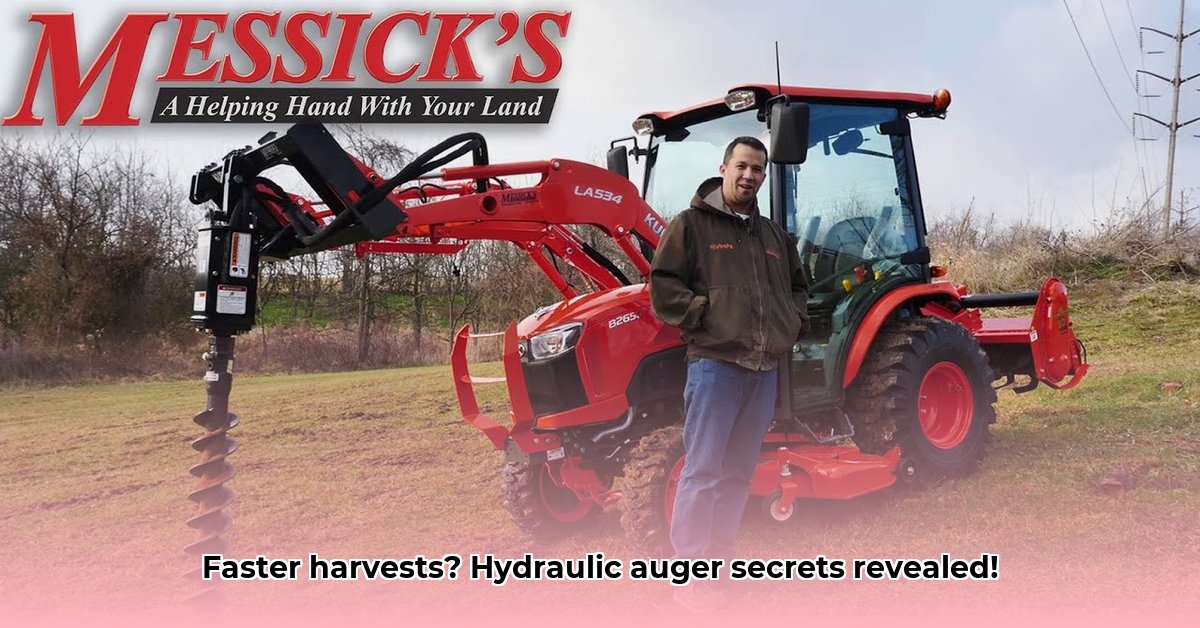
Choosing the right auger for your compact tractor significantly impacts farm efficiency. This guide compares three-point hitch and front-mounted hydraulic augers, helping you select the best option for your needs and budget. We'll cover installation, operation, maintenance, and provide a decision-making framework to ensure you make the most informed purchase. For more in-depth information, check out this comprehensive guide.
Three-Point Hitch Augers: Simple and Affordable
Three-point hitch augers are a cost-effective solution for smaller projects and lighter soil conditions. Their ease of installation and lower initial cost make them attractive to many farmers. They are easily attached to your tractor's three-point hitch system. However, their power limitations restrict their effectiveness in tougher soil. They lack the downforce needed for efficient penetration in heavy clay or rocky soil.
Pros:
- Lower Initial Cost: Significantly cheaper upfront.
- Simple Installation: Quick and easy setup minimizes downtime.
Cons:
- Limited Digging Power: Struggles in hard, compacted soils.
- Inefficient in Dense Soil: Slower progress and increased effort in challenging conditions.
Front-Mounted Hydraulic Augers: Power and Precision
Front-mounted hydraulic augers offer superior power and control, making them ideal for larger-scale projects and challenging soil conditions. Their direct connection to your tractor's hydraulic system provides greater downforce, enabling efficient digging even in the toughest soils. This translates to faster completion times and less physical strain. However, the increased power and versatility come at a higher price point and necessitate a dedicated hydraulic function on your tractor.
Pros:
- Superior Digging Power: Easily handles dense, compacted soils.
- Efficient in All Soil Types: Maintains speed and efficiency across varying soil conditions.
- Ideal for Large Projects: Suitable for extensive fencing, large-scale planting, and other demanding tasks.
Cons:
- Higher Purchase Price: Substantially more expensive than three-point hitch augers.
- Requires Dedicated Hydraulic Function: Needs a third function hydraulic outlet on your tractor.
Head-to-Head Comparison: Choosing the Right Auger
This table summarizes the key differences between three-point hitch and front-mounted hydraulic augers to aid your decision-making process:
| Feature | Three-Point Hitch Auger | Front-Mounted Hydraulic Auger |
|---|---|---|
| Initial Cost | Low | High |
| Digging Power | Low | High |
| Soil Type | Light to Medium soils | All soil types |
| Project Scale | Small projects | Large projects |
| Hydraulics Needed | None | Dedicated hydraulic function |
| Maintenance | Relatively easy | Moderate |
Choosing Your Auger: A Step-by-Step Guide
- Assess Your Needs: What's the scale of your project? How demanding is your soil? Be honest about your budget and tractor capabilities.
- Check Tractor Capabilities: Does your tractor have the required hydraulic capacity (for hydraulic augers)?
- Weigh the Pros and Cons: Match the auger's capabilities to your specific project requirements.
- Consider Pre-owned Equipment: Used augers can offer cost savings; inspect thoroughly before purchasing.
- Seek Advice: Consult with experienced farmers or equipment dealers.
Installation and Operation: Prioritizing Safety
Always consult your auger's specific instruction manual. Safety precautions are paramount. The following outlines general procedures:
Three-Point Hitch Auger:
- Securely attach the auger to the tractor's three-point hitch.
- Properly engage and secure the PTO shaft.
- Follow your tractor's instructions for engaging the PTO.
Front-Mounted Hydraulic Auger:
- Carefully connect the hydraulic lines; ensure secure connections.
- Verify sufficient hydraulic flow.
- Operate the auger using the tractor's designated hydraulic controls.
Maintenance: Extending Auger Lifespan
Regular maintenance is vital for extending an auger's lifespan and ensuring optimal performance. Key maintenance tasks include:
- Regular Cleaning: Remove mud and debris after each use.
- Lubrication: Regular lubrication prevents wear and tear.
- Sharpening (if needed): Dull bits reduce efficiency and increase breakage risk.
- Inspection: Periodically inspect for damage or wear.
Conclusion: Optimizing Farm Efficiency
Selecting the right hydraulic auger is a crucial decision impacting farm productivity. By carefully considering your specific needs, tractor capabilities, and the pros and cons of each auger type, you can ensure a long-term solution that maximizes efficiency and minimizes costs.